
Crash a hundred times before it costs anything
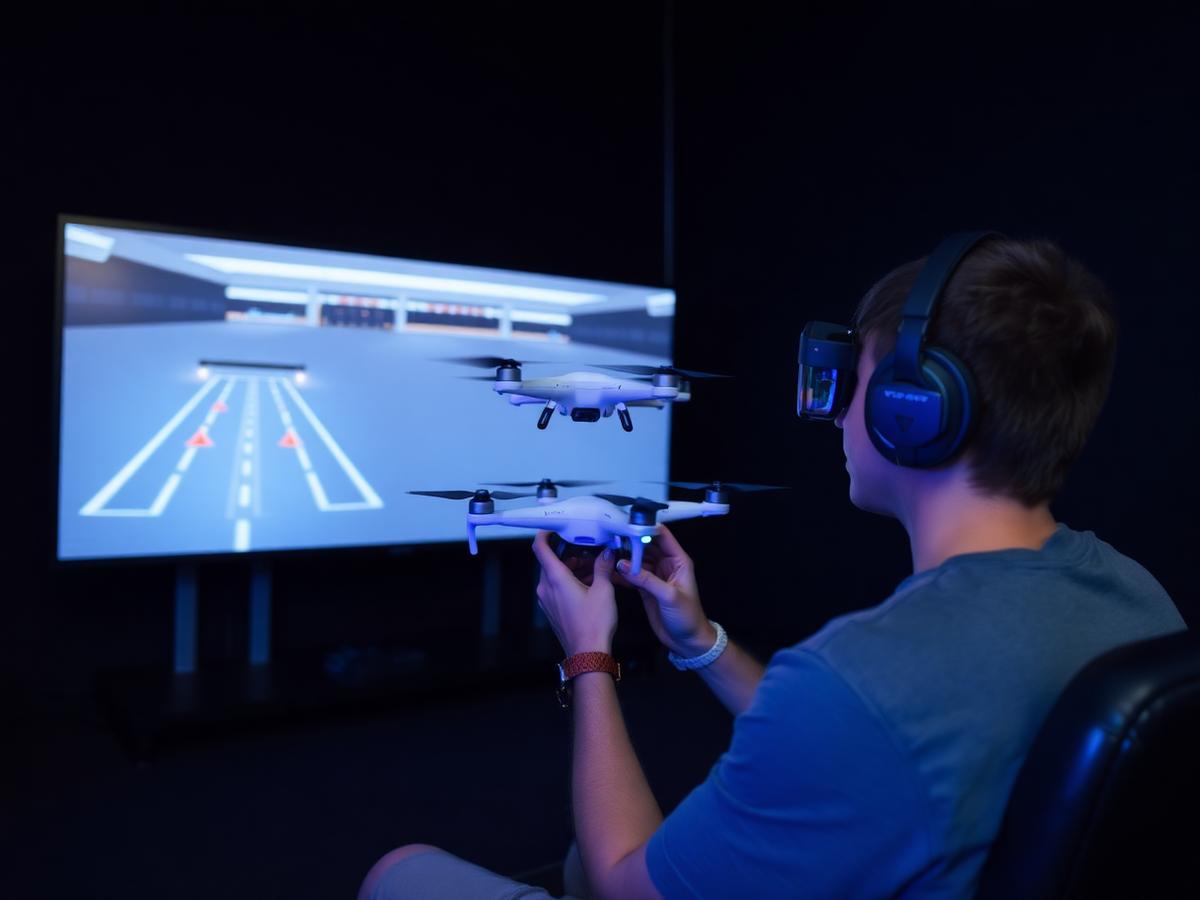
Our simulator lab gives students the flight hours that make real piloting safe. Every crash is data, and every reset is instant.
The lab is a bridge, not a video game
Students fly on calibrated controllers running physics-accurate simulators, then step onto the netted flight range with the same transmitter in their hands. Muscle memory transfers; repair bills don't.
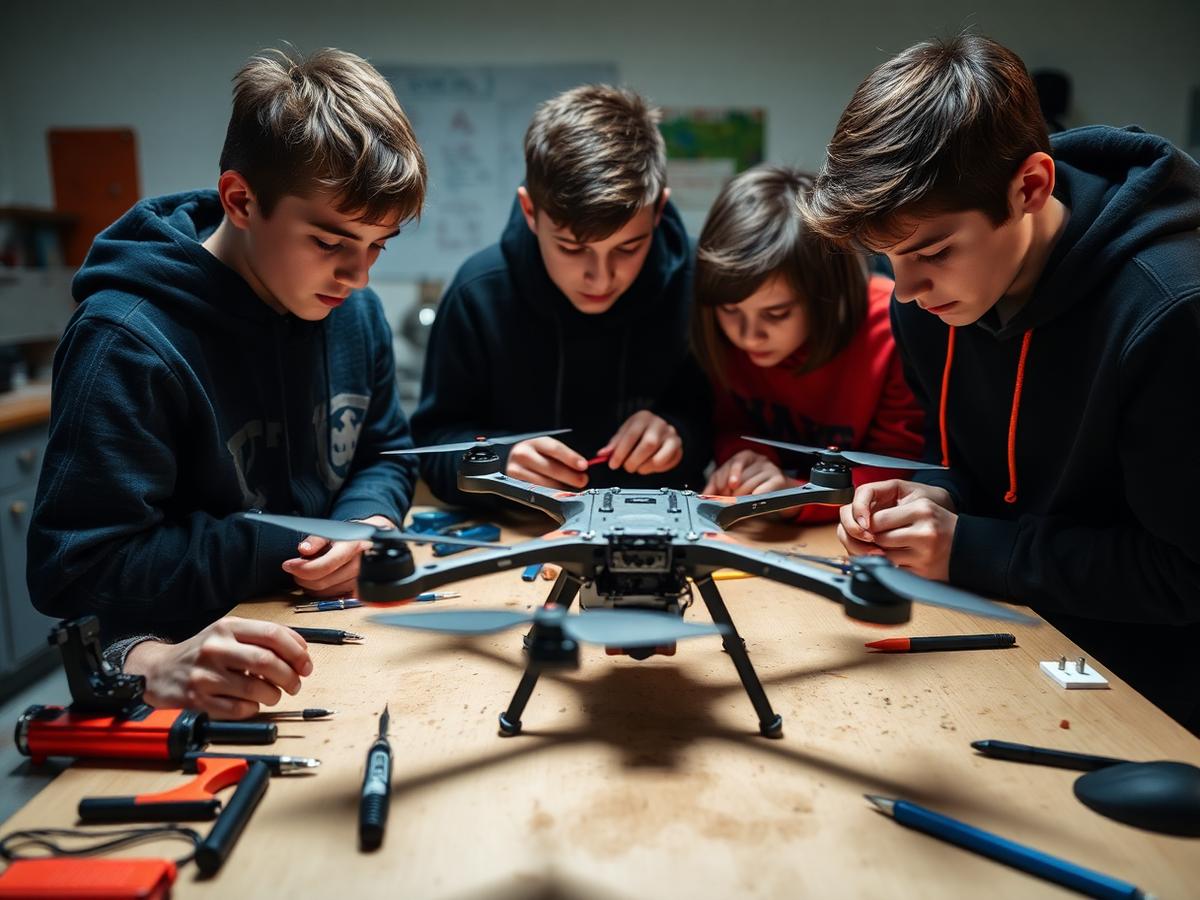
Four stages from first hover to race heats
Basic controls
Throttle, yaw, pitch and roll in an open arena. Students learn orientation — including the moment the drone turns to face them and every input reverses.
Safety-first curriculum
Before a single propeller spins, students pass a ground-school module: airspace basics, pre-flight checklists, battery handling and LiPo storage, prop guards, failsafe and return-to-home behaviour, and the rules for flying near people. Real flights happen in a netted cage or an approved open field with a spotter for every pilot.
Transition path to real hardware
0% checkedFind your student's stage
Every launch starts with a countdown.
Book a free trial session at the Hyderabad experience center — pick a mission, pick an age band, pick a slot.